


Riyadh is set to host a Saudi hub of the HSIL Hackathon 2026, a two-day global competition organised by the Health Systems Innovation Lab (HSIL) at Harvard T.H. Chan School of Public Health, delivered through a network of international partner hubs. The 2026 theme is “Building High-Value Health Systems: Leveraging Artificial Intelligence (AI)”, with a practical focus on creating AI-driven solutions that can improve quality, access, and efficiency across health systems.
Participants will collaborate with peers (students, clinicians, engineers, designers, policy analysts, entrepreneurs, and others) across five continents to turn a real problem into a clear solution concept, pitch, and (when possible) an early prototype.
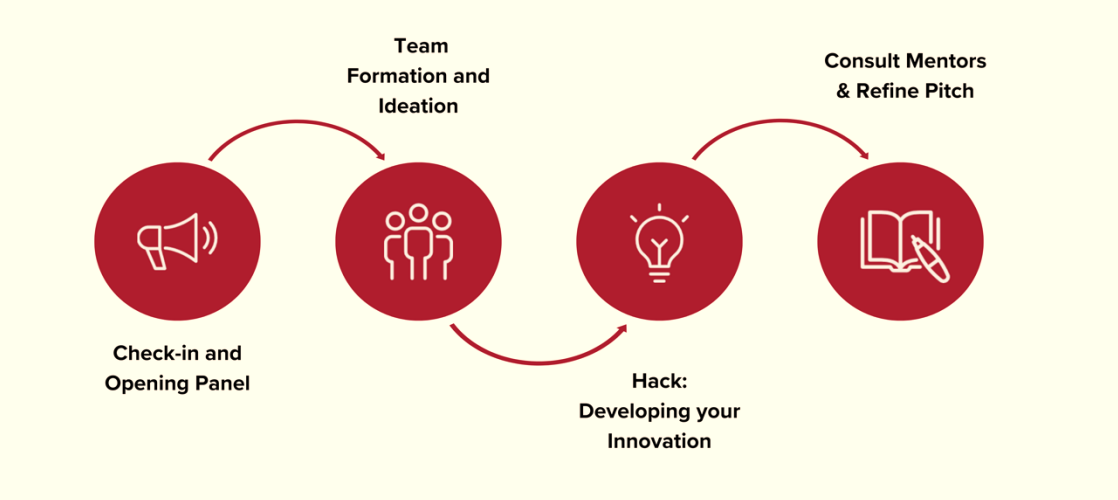
What the Hackathon is Designed to Achieve
The HASIL hackathon is an intensive, collaborative two-day sprint where teams brainstorm, build, and pitch solutions to a specific health systems challenge, with the goal of moving from concept to a functional prototype or working product within the event timeframe. The emphasis is on ideas that are actionable, solutions that can fit into real clinical workflows, patient journeys, and health system constraints.
The 2026 focus on AI reflects a simple question: Where can AI meaningfully reduce friction in care while improving outcomes and value? In HSIL’s framing, “high-value” means better health results for patients and communities, delivered with smarter use of time, staff capacity, and resources.
Event Agenda
Friday, 10 April
| Time | Session |
|---|---|
| 9:30 AM | Opening Session |
| Welcome Address (10 min) | |
| Keynote Address (10 min) | |
| Keynote Address (10 min) | |
| 10:00 AM | Panel Discussion |
| 10:30 AM | Coffee Break |
| 11:00 AM | Process & Evaluation Criteria |
| 11:30 AM | Jumu'ah Prayer & Lunch |
| 1:30 – 3:30 PM | Build Sprint Workshop |
| 5:00 PM | Deadline for Uploading Project Briefs |
Saturday, 11 April
| Time | Session |
|---|---|
| 9:30 AM | Opening Session |
| Announcement of Shortlisted Teams for Pitching | |
| 9:45 AM | Presentation: Pitch Evaluation Criteria |
| 10:00 AM | Pitching Workshop |
| 10:30 AM | Coffee Break |
| 11:00 AM | Healthcare Innovation Session |
| 11:15 AM | KAUST Technology Showcase |
| 11:30 AM | Independent Work & Lunch |
| 2:00 PM | Pitch Presentations Begin |
| 5 min Pitch · 5 min Q&A · 5 min Transition | |
| 3:30 PM | Judges Convene to Score |
| Coffee Break | |
| 4:00 PM | Winners Announced |
| 4:30 PM | Certificate Distribution & Closing |
What Teams Typically Build
Participants are encouraged to think creatively, innovate, and push the boundaries of their fields. The examples below highlight practical challenges faced across health systems, but they are not an exhaustive list, and teams are free to explore additional ideas that address meaningful healthcare problems.
Examples of challenge areas highlighted in the HSIL Hackathon materials include:
- Electronic health record (EHR) analysis to identify patterns and predict patient outcomes
- AI-assisted diagnosis and patient monitoring for earlier detection and treatment adjustments
- Intelligent healthcare chatbots to support patient guidance and clinical workflows
- Solutions addressing fragmentation between health systems and data platforms
- AI tools that help users navigate overwhelming health information and digital health apps
- Technology to mitigate healthcare workforce shortages
- Systems that improve coordination across fragmented care pathways
- AI-driven tools that strengthen health literacy and patient understanding
- Predictive tools that support preventive health engagement
- AI solutions that break language and communication barriers in healthcare
- Innovations in pediatric AI that integrate complex and multi-source health data
Teams present their ideas locally at their hub, and winning teams are nominated to progress to the next stage of the global venture-building program.
What to Expect for the Pitch
At the end of the hackathon, each team delivers a 3-minute pitch presenting their solution. With limited time, the presentation should be clear, structured, and focused on the most important aspects of the idea. Teams are encouraged to practice beforehand and highlight both the problem and the value of their solution.
A simple structure for the pitch includes:
- Introduction (10 seconds): Briefly introduce yourself and your team in a memorable way.
- Problem statement (20 seconds): Clearly explain the problem your solution addresses and who it helps.
- Product overview (1 minute): Describe the core idea, key features, and the technical approach behind your solution.
- Demo (1 minute): Show a live demonstration if possible, or present a visual prototype to illustrate how the solution works.
- Wrap-up (30 seconds): Summarize the main points and close with a clear statement on the potential impact of your idea.
Source: HSIL Hackathon Participant Guide 2026 (Harvard T.H. Chan School of Public Health).
What Happens After the Hackathon?
Awards, Investors, and an 8-Week Venture Pathway
One reason the HSIL Hackathon stands out is that it is designed to continue beyond the two-day build. HSIL’s official timeline shows a structured pathway after April. Nominated teams enter a venture-building sequence that leads to a global Demo Day on June 19, 2026, including pitches to investors and awards.
Selected winning teams are invited into a remote, eight-week HSIL Venture Incubation/Venture Building Program, structured in phases and supported by educational sessions and mentorship. The program helps teams refine their solutions, strengthen their implementation plans, and develop their prototypes with guidance from experts at the Harvard T.H. Chan School of Public Health. It also provides opportunities for exposure to investor networks, particularly for teams aiming to scale their ideas beyond a pilot stage.
“Hosting the Harvard Health Innovation Hackathon in Saudi Arabia reflects the Kingdom’s growing momentum in digital health and innovation. It gives our youth and healthcare innovators a meaningful platform to help shape the future of healthcare.” — Ameer Albahouth, Mentor, Organizer, and Founder of Arbaaa
| Phase | Dates (2026) | What Happens | Output/Progression |
|---|---|---|---|
| Application Period | Dec 8 – Feb 28 | Registration and team sign-up (individuals or teams). | Applicants confirmed for hub participation. |
| HSIL Collaborative Hub Program | Feb 9 – Mar 6 | Speaker series (open to all registered participants) + mentorship opportunities. | Teams refine problems and prepare to build. |
| Two-day Hackathon Event | Apr 10–11 | In-person hackathon at local hubs: build + pitch to local judges. | Winning teams from each hub (about 50 teams total) advance. |
| Venture Building Bootcamp 1 | Apr 20 – May 1 | Venture-building support: validation, solution shaping, pitch development. | 50 teams → 20 teams advance. |
| HSIL Judging + Bootcamp 2 | May 4 – May 15 | Further mentoring plus judging to assess progress and readiness. | 20 teams → 10 finalists advance. |
| Global Judging Window | May 18 – Jun 12 | Finalist refinement + evaluation by a global panel. | Finalists prepared for Demo Day. |
| Demo Day | Jun 19 | Final pitches to investors + awards. | Awards announced; investor exposure and next-step opportunities. |
How to Apply
Applicants can register as individuals or as part of a pre-formed team (recommended 2–6 members). HSIL asks participants to submit a short idea/problem statement summary (150–200 words) as part of registration, along with basic information and agreement to the hackathon terms.
Project Brief Submission
Frequently Asked Questions
Q: When and where is the hackathon taking place?
The HSIL Hackathon 2026 will take place April 10–11, 2026. It is organized as a global event with multiple hubs around the world. In Saudi Arabia, the local hub will be held in Riyadh, in collaboration with (MBSC) and the Dr. Sulaiman Al Habib Medical Academy.
Q: What is the theme this year?
The 2026 theme is “Building High-Value Health Systems: Leveraging Artificial Intelligence.” The focus is on developing AI-driven solutions that can improve healthcare quality, efficiency, and patient outcomes.
Q: What are judges looking for?
Judges evaluate teams based on several factors, including the clarity of the problem addressed, innovation of the solution, technical feasibility, implementation potential, and the overall quality of the pitch and demonstration.
Q: Who can participate?
The hackathon is open to students and professionals from diverse fields, including healthcare, engineering, technology, business, design, and public health. Interdisciplinary teams are encouraged.
Q: Is there a fee to participate?
No. According to the hackathon guidelines, local hubs are expected to host the event without charging participants a registration fee, making participation accessible to a wide range of innovators.
Q: Do I need a team to apply?
No. Participants can apply individually or as part of a team. Individuals who apply alone are typically matched with other participants to form teams before the hackathon begins.